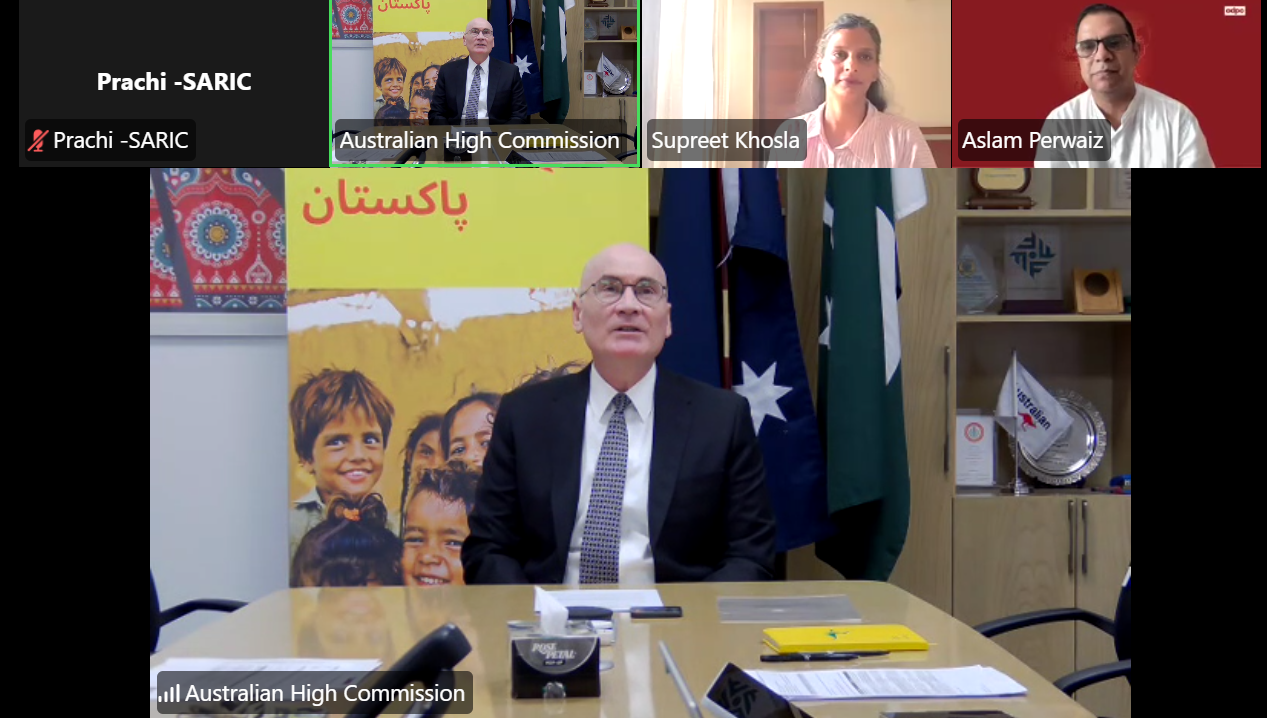
The session opened with remarks by His Excellency Mr Timothy Kane, Australian High Commissioner to Pakistan, and Ms Emily Lyons, First Secretary (Development), who highlighted Australia’s long-standing partnership with Pakistan and SARIC’s role in strengthening institutional capacity, collaboration, and resilient regional networks. Mr Aslam Pervaiz, Executive Director of ADPC, emphasised rising systemic risks to infrastructure and the need for integrated, risk-informed resilience approaches.
Virtual Masterclass on Resilient and Inclusive Transport -Power Systems for emergencies
Pakistan | April 14, 2026
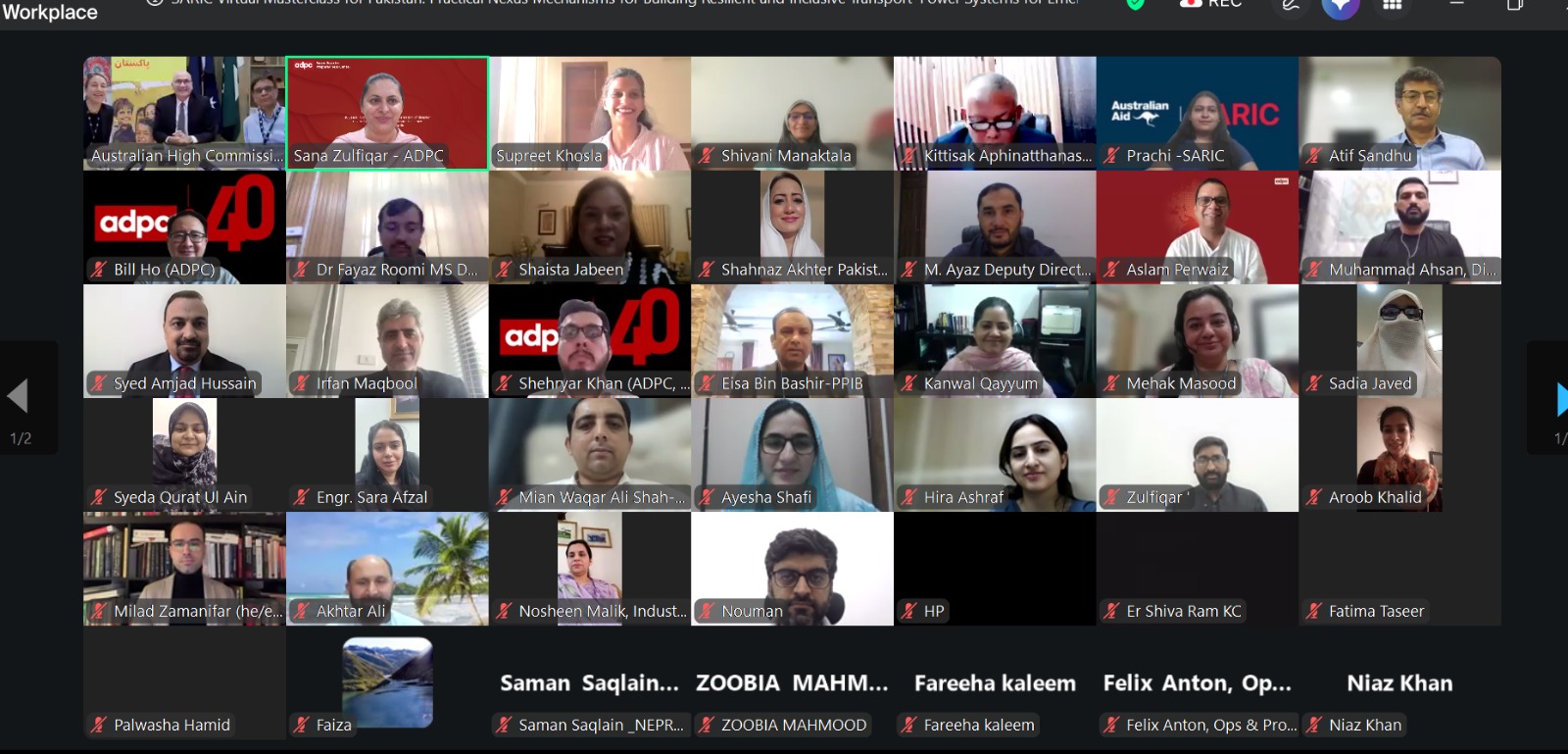
SARIC, in partnership with the Asian Disaster Preparedness Centre (ADPC) as Knowledge Partner, organised a virtual masterclass in Pakistan on the theme “Practical Nexus Mechanisms for Building Resilient and Inclusive Transport–Power Systems for Emergencies.” The session aimed to strengthen understanding of how transport and power systems intersect during emergencies and to showcase practical approaches for protecting critical infrastructure, maintaining essential services, enabling coordinated decision-making, and promoting inclusive and gender-responsive resilience. The masterclass brought together 57 participants from Pakistan and across the wider South Asia region, representing government agencies, utilities, regulators, development partners, civil society organisations, and SARIC and Australia Awards South Asia & Mongolia (AASAM) alumni. The strong participation of women from the energy, transport, governance, reflected SARIC’s commitment to advancing women’s leadership and participation in infrastructure resilience.
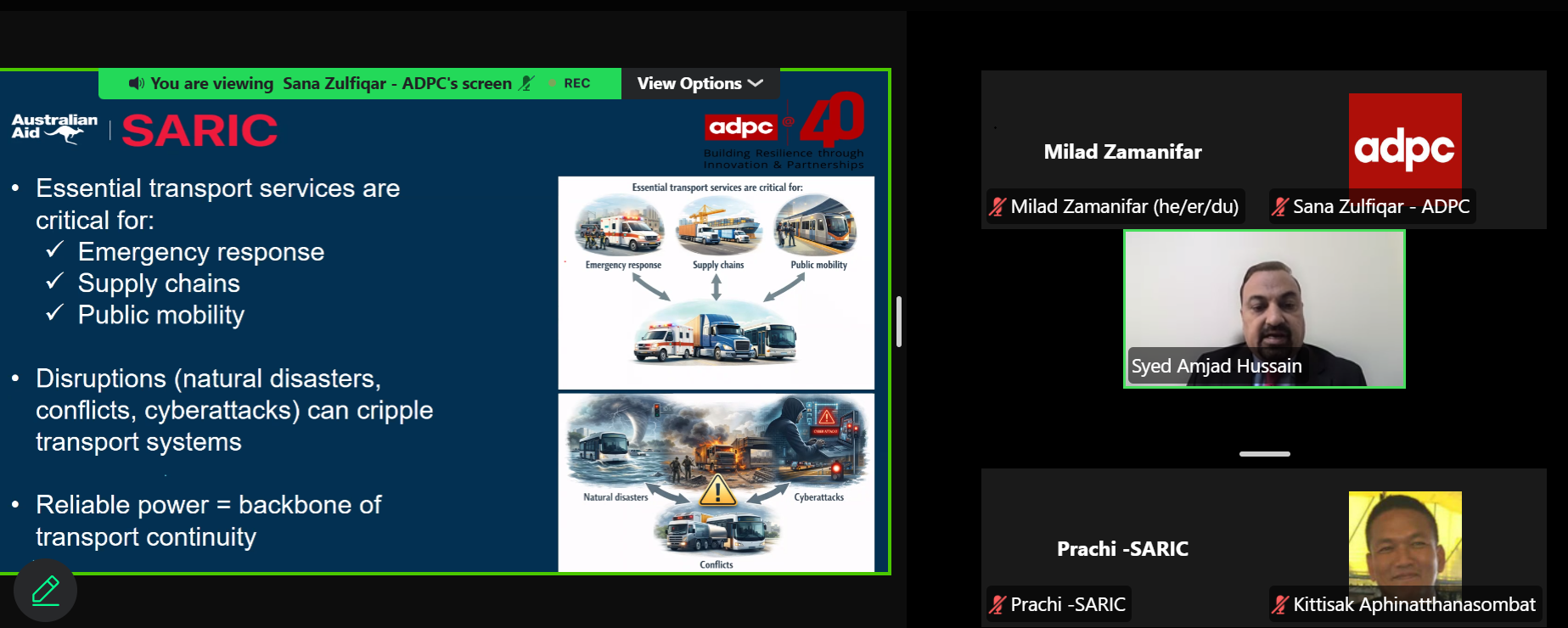
Technical sessions featured regional experts: Mr Atif Sohail discussed how digital integration and shared situational awareness enable a shift from reactive to proactive disaster management, drawing on glacier monitoring in Pakistan and earthquake early warning in Tokyo. Mr Milad Zamanifar highlighted the interdependence of transport and power systems, noting how even minor disruptions can trigger cascading economic and social impacts, especially for vulnerable communities. Dr Amjad presented Australian case studies on continuity planning, including microgrids, battery storage, and backup systems, while noting challenges in policy, financing, and data. The final session, led by Mr Bill Ho, focused on equity and gender-responsive approaches, emphasising inclusive design and representation of women and persons with disabilities in resilience efforts.
The masterclass generated strong engagement from participants, who raised substantive questions on research and knowledge gaps, cross-sector data sharing, examples of successful transport–power collaboration, and the financial implications of resilience investments. The active participation and quality of discussion demonstrated a strong demand for continued regional knowledge exchange and deeper technical engagement on resilient and inclusive infrastructure systems.